When Dan Bongino announced he would step down as FBI Deputy Director in January, reactions split instantly along familiar political lines. Supporters praised his service and sacrifice. Critics rushed to declare his tenure a failure. The truth, as usual, sits somewhere far more revealing — and far more uncomfortable for Washington. Bongino’s departure is not just about one man returning to media. It is a case study in what happens when an outsider is dropped into one of the most insulated power structures in the federal government. His resignation tells us less about Bongino — and far more about the system he briefly helped run.
An Outsider Enters a Locked Institution
Dan Bongino did not come up through the FBI’s ranks. That fact alone made him controversial the moment President Trump appointed him as Deputy Director. For more than a century, the bureau’s second-in-command role had been filled internally. Bongino shattered that precedent. A former Secret Service agent, NYPD officer, and nationally known political commentator, he represented exactly what career bureaucrats fear most: someone not invested in protecting institutional habits, alliances, or narratives.
From the start, Bongino’s presence signaled disruption. His appointment said plainly that the Trump administration believed the FBI needed reform from the outside, not incremental tweaks from within. For many career officials, that was not reform — it was an intrusion. Resistance was inevitable.
A Short Tenure With a Clear Purpose
Bongino’s time at the FBI was not long, but it was purposeful. This was never a retirement appointment or a ceremonial role. By his own admission, he expected the job to last roughly a year. That context matters. He was not building a decades-long career inside the bureau. He was sent in to stabilize, evaluate, and push reform at a moment when public trust in the FBI was badly damaged.
His supporters argue that the bureau made tangible progress during his tenure: internal reviews were accelerated, long-stalled cases were advanced, and oversight tightened. Critics dismiss those claims. What cannot be dismissed is the intensity of internal pushback he faced. That pushback alone reinforces the argument that Bongino was doing exactly what he was sent there to do.
“Shocked to My Core”
Perhaps the most telling detail of Bongino’s resignation was not the timing, but his language. In earlier remarks referenced by supporters and critics alike, Bongino said what he learned during his investigations left him “shocked to [his] core” and fundamentally changed him. That is not the language of a man bored by bureaucracy. It is the language of someone who discovered realities far darker than anticipated.
Those words have fueled speculation, much of it intentionally ignored by legacy media. What exactly did Bongino encounter? What internal practices, failures, or abuses crossed lines even he did not expect? While details remain classified or undisclosed, the intensity of his reaction suggests the concerns many conservatives have raised about the FBI were not exaggerated.
The Epstein Rift and Internal Tension
The Guardian and other outlets highlighted reported tension between Bongino and Attorney General Pam Bondi over the decision not to release certain files tied to the Jeffrey Epstein investigation. While specifics remain unclear, the existence of such a clash is revealing on its own. Epstein remains one of the most sensitive and politically explosive cases in modern history. Transparency demands collide constantly with institutional risk management.
That Bongino reportedly pushed harder than others is consistent with his public persona and prior career. That resistance followed is equally consistent with how Washington protects itself. Whether one agrees with every tactical decision or not, the broader pattern is unmistakable: reform-minded pressure meets bureaucratic immovability.
Trump’s Assessment: Simple and Telling
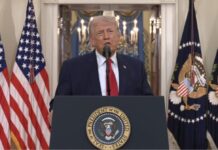
President Trump’s response was brief but revealing. “Dan did a great job,” he told reporters. “I think he wants to go back to his show.” That statement was not defensive. It was not dismissive. It acknowledged success without drama. Trump did not frame the resignation as a firing, a failure, or a retreat. He framed it as the natural conclusion of a mission.
That framing aligns with what many close to Bongino have suggested all along. He left a lucrative media career to take on one of the most stressful and politically radioactive jobs in Washington. He paid a financial and personal price to do so. Returning to media does not erase that service — it underscores it.
Reform Is Not Welcome in Permanent Washington
If Bongino’s tenure teaches one lesson, it is this: institutions that claim to welcome accountability rarely do. The FBI is no exception. Decades of unchecked authority, internal loyalty networks, and political insulation have produced an agency deeply resistant to outside scrutiny. Anyone expecting a smooth reform process fundamentally misunderstands how Washington works.
This does not mean reform is impossible. It means reform is painful, temporary, and often incomplete. Bongino’s presence forced conversations that otherwise would not have happened. His departure does not reverse those conversations — but it does highlight how fragile reform efforts remain.
Media Narratives vs. Ground Reality
Predictably, media coverage split along ideological lines. Conservative outlets emphasized Bongino’s service and sacrifice. Left-leaning publications framed his exit as chaos, controversy, or quiet failure. Neither tells the full story. The reality is more complex and more troubling.
Bongino did not fail to adapt to the FBI. The FBI failed to adapt to reform. That distinction matters. It explains why so many reformers cycle in and out of Washington without lasting change. The system is designed to absorb disruption, wait it out, and return to baseline.
What His Exit Means Going Forward
With Bongino gone, leadership continuity falls to figures like Andrew Bailey under FBI Director Kash Patel. Whether momentum continues depends on political will, not personalities. Bongino’s resignation does not end reform — but it does test whether reform can survive without high-profile outsiders forcing the issue.
For conservatives watching closely, this moment should not inspire cynicism so much as clarity. Institutions do not change themselves. They respond only to pressure — sustained, informed, and unrelenting. Bongino applied that pressure for as long as he could. Whether it lasts is now an open question.
A Measured Conclusion, Not a Meltdown
Dan Bongino did not leave in disgrace. He did not leave quietly, either. He left with gratitude, restraint, and unmistakable signals that what he saw inside the bureau mattered deeply. That alone should give Americans pause. The story of his resignation is not about a podcaster returning to a microphone. It is about a system that remains far more resistant to sunlight than it admits.
His departure should not end the conversation. It should sharpen it.
WE’D LOVE TO HEAR YOUR THOUGHTS! PLEASE COMMENT BELOW.
JIMMY
Find more articles like this at steadfastandloyal.com.
h/t: Steadfast and Loyal