
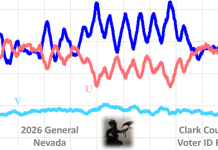
Texas midterm numbers are at the center of a dispute over Houston voting, after Truth Is Freedom on X highlighted a large increase in early in-person ballots. The post, featured by The Gateway Pundit, said Houston recorded 87 percent more early in-person voting than in previous years. It cited 318,517 more votes in 2026 than in 2022, alongside an 8.7% increase in voter registration over the same period. Those figures are presented as a warning sign, not a routine turnout story. But they are claims, and the figures alone do not establish why the change occurred. That distinction matters when a political argument is built around the word “impossible.”
The argument rests on the gap between registration growth and ballot growth. According to the post, an 8.7% rise in registration accompanied an 87% jump in early in-person ballots, which it described as roughly ten times what was expected. The post said the increase amounted to 318,517 additional votes compared with 2022. That comparison drives the controversy because it combines a turnout surge with a large raw increase. Yet the material presented does not explain the underlying records or counting process. A serious review would have to test the figures against actual results, not simply repeat the most dramatic percentage.
Source post on X: https://twitter.com/TruthAnswersAll/status/2124966459809931297?a=ueZNb5KEq-VYaO9ANhU&s=20
Why Texas Midterm Numbers Are Drawing Scrutiny
Percentages can sound conclusive while hiding important context. An 87% increase could reflect a particularly low prior baseline, a different definition of early voting, or a change in how ballots were counted, although none of those explanations is established here. The same caution applies to the registration figure, which the post uses as a rough expectation for turnout. Registration and voting are related, but they are not identical measures. The reported gap deserves documentation and an explanation. It is not fair to treat a striking ratio as proof of wrongdoing by itself.
That is where the Texas midterm numbers move from campaign rhetoric to an accountability test. If the Houston figures are correct, election officials should explain what was measured, which years were used, and how the additional ballots were tabulated. If the comparison leaves out a key change, that should be stated clearly instead of buried under slogans. The Gateway Pundit emphasizes that the numbers “DO NOT ADD UP!” but that phrase is an accusation, not an audit finding. Critics need evidence others can check. Supporters should welcome scrutiny, because unexplained numbers feed distrust from both sides.
The Senate Comparison Raises a Second Red Flag
The post widens the argument beyond Houston. It says four Democratic Senate candidates from traditionally red states received more votes in 2026 than Kamala Harris received in those same states in 2024. The article presents that comparison as unprecedented since the end of the Second World War. It describes the historical review as roughly 20 postwar midterm cycles from 1946 to 2022, with about 33 Senate races per cycle. Those details are offered to show how unusual the pattern would be. They still need to be checked against complete state-by-state election data before the conclusion is settled.
One example highlighted is Jimmy Talarico, who the post says received over 609,732 more votes than Harris in his Texas Senate race. The article uses that gap, along with three other comparisons, to argue that turnout and candidate performance moved together in a nearly impossible way. Grok was asked to estimate the odds and answered roughly 1 in 100 to 1 in 500, or lower, for a modern midterm, while calling it effectively 0 in the historical record. That is an estimate from Grok, not an official election finding. It may sharpen the argument, but it cannot replace a transparent review of the underlying totals. Extraordinary numbers deserve verification, not automatic certainty.
The Political Stakes Go Beyond Houston
The post treats the reported results as a political earthquake for Texas. It says voters were angry about gas prices and chose Gina Hinojosa as their next governor, while describing her as a gas-hating radical and open-borders communist. Those labels are the article’s rhetoric, not neutral descriptions, and should not be confused with verified facts. The concrete claim is that Hinojosa called on Governor Abbott to end state cooperation with ICE or said she would do so on day one. If that outcome stands, immigration enforcement would become an immediate conflict between the incoming administration and the state government.
Gun policy is another area where the post predicts a sharp turn. It says Democrats took control of the Texas House and introduced roughly 20 bills on Monday, November 9, 2026, the first day lawmakers could prefile for the 90th Legislature. NRA-ILA is cited as counting roughly 35 firearm-related bills, with the vast majority described as anti-gun. The 2027 session does not convene until January 12, yet the article says early filings reveal the agenda. That does not prove how the bills will fare, but it shows why the claimed results matter to Second Amendment supporters. The fight is framed as a test of whether Texas remains politically red in practice.
Gun and Energy Fights Raise the Stakes
The same political shift is tied to energy policy. The article says Texas Democrats want to freeze electricity rates and compares that proposal to communist Venezuela. That comparison is political commentary, not an established description of the policy’s legal or economic effect. Still, the issue belongs in the larger debate over the election. The post presents the proposed freeze as another example of Democrats moving quickly after the midterms. Readers should separate the allegation about what lawmakers want from the question of what language they actually introduced.
Taken together, the Houston surge, Senate vote comparisons, and alleged 21-point swing are being used to argue that Texas was stolen. The post says a 21-point move toward Democrats in one major election cycle has never happened before in a solid red state, while Grok describes swings of roughly 20 or more points toward Democrats in reliably red states as uncommon in recent decades. Those statements identify an extraordinary pattern, but not its cause. Before accusations go further, the public needs clear definitions, complete comparisons, and an explanation of how each total was produced. That is the line between a troubling anomaly and a proven election case. Texas midterm numbers are a reason to demand answers, not declare the verdict settled.
Houston, Texas – Harris County
Where did all these votes come from? pic.twitter.com/8O2Wlzcj0L— Truth Is Freedom (@TruthAnswersAll) November 23, 2026
WE’D LOVE TO HEAR YOUR THOUGHTS! PLEASE COMMENT BELOW.
Find more articles like this at pagetraveler.com.



Sound off
Join the conversation
Be the first to comment.
Load more comments